Trade-In vs Private Sale in Hazelwood, MO: The Tax Math
Missouri's 4.225% trade-in tax credit changes the math on selling privately vs trading in. Run the real numbers before you decide in Hazelwood.
For most Hazelwood buyers replacing one vehicle with another, the private sale needs to net you roughly 4.225% of your new vehicle's price more than the dealer's trade-in offer just to break even — because Missouri only lets you deduct a trade-in from the taxable purchase price when it happens in the same transaction. Add local use taxes and the gap widens. On a $35,000 replacement vehicle, that's roughly $1,479 in state tax alone that a trade-in erases and a private sale does not.
That single rule — codified in Chapter 144 RSMo — is why the national "you always get more selling privately" advice often fails in Missouri. Below is the actual math, the documentation you need, and how to decide which path puts more money in your pocket in Hazelwood.
How does Missouri's trade-in tax credit actually work in 2026?
Under Chapter 144 RSMo, Missouri applies the 4.225% state sales/use tax (plus local use taxes) only to the net purchase price of your new vehicle — the agreed sale price minus the documented trade-in allowance and any qualifying rebates. The credit applies only when the vehicle is taken in trade as part of the same purchase transaction, and only with a bill of sale documenting the actual allowance.
Two consequences follow. First, if you trade in a car worth $15,000 against a $35,000 purchase, you pay state tax on $20,000, not $35,000. Second, if you sell that same car privately for $15,000 and then buy the $35,000 vehicle separately, you pay state tax on the full $35,000. Proceeds from a separate private sale do not qualify as a trade-in credit under Missouri Department of Revenue guidance — there is no offset.
How much more do I need to net on a private sale in Missouri to beat a trade-in?
You need to net enough above the dealer's trade offer to cover the lost tax credit. In Missouri that's at least 4.225% of your new vehicle's purchase price, plus any local use tax that applies in Hazelwood or St. Louis County. On a $30,000 purchase, that's roughly $1,268 in state tax alone; on a $50,000 purchase, roughly $2,113 — before local use tax is layered in.
The break-even table
The table below shows the minimum private-sale premium you need over a dealer trade offer just to match the trade-in outcome, using the 4.225% state rate. Local use tax (which varies by jurisdiction and requires voter approval) is additive on top.
| New vehicle price | State tax saved by trading in (4.225%) | Private sale must exceed trade offer by at least |
|---|---|---|
| $20,000 | $845 | $845 + local use tax |
| $30,000 | $1,268 | $1,268 + local use tax |
| $40,000 | $1,690 | $1,690 + local use tax |
| $50,000 | $2,113 | $2,113 + local use tax |
| $65,000 | $2,746 | $2,746 + local use tax |
If the private-sale premium doesn't clear that hurdle, the trade-in wins on cash-in-pocket — before you've even accounted for the time, listing fees, test drives, tire-kickers, or the risk of a bounced payment.
What does the private-sale route actually cost you in time and risk?
A private sale in the Hazelwood market typically means detailing the vehicle, photographing it, listing on multiple platforms, screening buyers, hosting test drives, handling the title assignment, and collecting certified funds. Sellers commonly spend two to six weeks from listing to closed sale, and Missouri requires the buyer to title within 30 days of purchase — so a buyer who delays can create paperwork friction that traces back to you.
You also carry the vehicle's insurance, registration, and any repair risk during that window. If a mechanical issue surfaces mid-listing, your asking price drops. Dealerships absorb that risk instantly on trade — an appraisal today becomes a check today, applied directly against your next purchase.
When does selling privately still win the math in Hazelwood?
Private sale beats trade-in when the private-market premium clearly exceeds the Missouri tax credit plus your time cost. That most often happens with in-demand used trucks, sports cars, low-mileage examples of popular models, and vehicles priced under $10,000 where wholesale-to-retail spreads are widest as a percentage of value.
It also wins when you're not buying a replacement vehicle at all — no purchase, no trade-in tax credit to lose, so the private-sale proceeds are pure cash. And it can win for high-demand collector or enthusiast vehicles where private buyers pay meaningfully above any dealer's wholesale bid. For a mainstream commuter sedan or a three-row SUV with average miles, the math usually tips the other way once Missouri's 4.225% credit is factored in.
How should Hazelwood buyers document a trade-in to protect the tax credit?
Missouri requires a bill of sale or other record showing the actual trade-in allowance to claim the credit at titling. Without that documentation, the Department of Revenue may assess tax on the full purchase price of the new vehicle — wiping out the entire benefit. The allowance must appear clearly on the purchase contract, separated from rebates, fees, and financing terms.
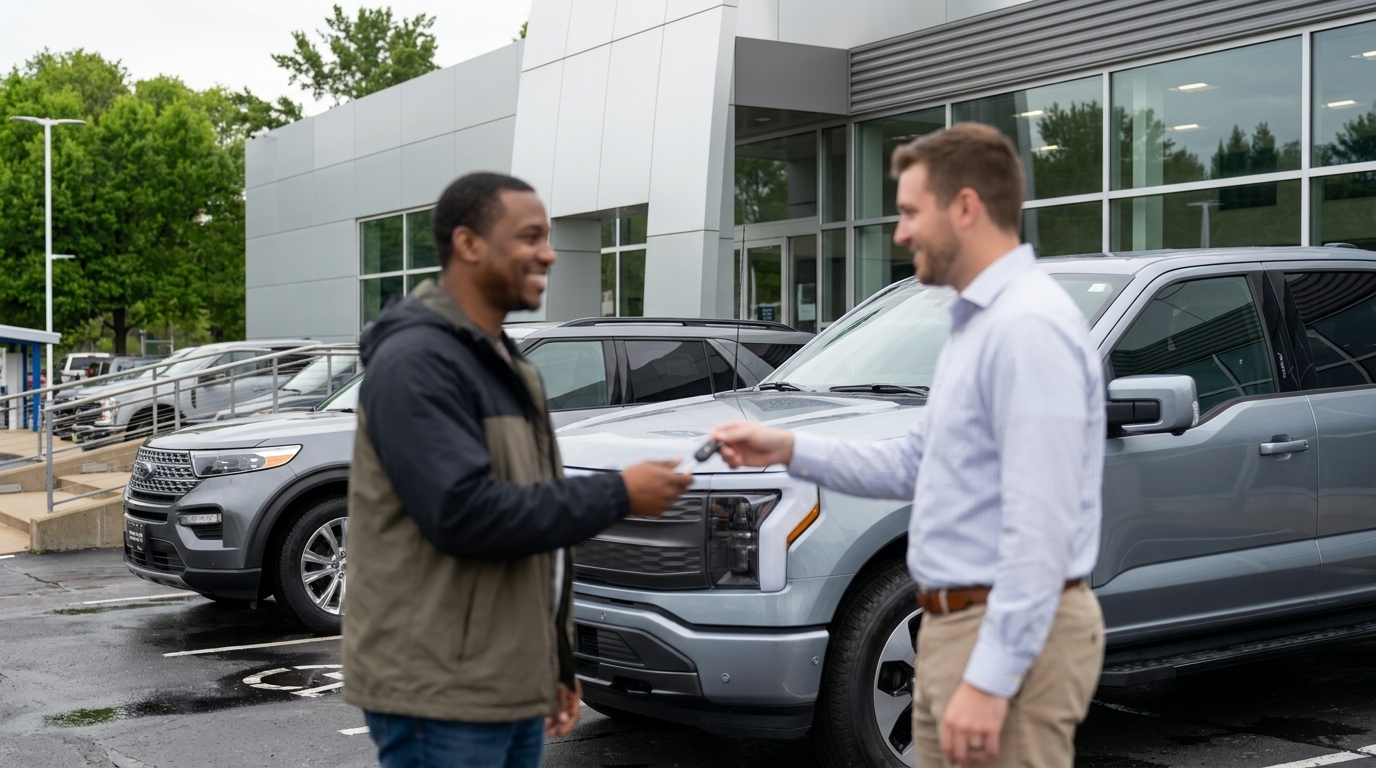
When working with a dealership like Bommarito Ford Superstore Hazelwood, the trade allowance is written into the buyer's order alongside the sale price and any manufacturer rebates, so the taxable base is calculated correctly and submitted to the Missouri license office at titling. Verify the allowance line on your paperwork before you sign — that single line item is what the state uses to compute what you owe.
What about the "180-day" private-sale credit some sites mention?
Some third-party sources claim Missouri allows private-sale proceeds to offset a new vehicle purchase within a 180-day window. That claim is not supported by the text of Chapter 144 RSMo or by mainstream Missouri Department of Revenue guidance. The conservative and legally supported reading is that only same-transaction trade-ins qualify for the credit. If you're planning around that supposed window, confirm with the Missouri DOR or a qualified tax professional before you commit to a private sale.
Running your own numbers: a Hazelwood worked example
Say you own a 2026 sedan. A dealer offers $18,000 on trade. A private buyer in the St. Louis metro area might pay $19,500 after two weekends of listings and test drives. You're eyeing a $42,000 replacement.
- Trade-in path: Taxable base = $42,000 − $18,000 = $24,000. State tax at 4.225% = $1,014. Cash outlay: $42,000 + $1,014 + local use tax + fees, offset by the $18,000 trade credit.
- Private sale path: Taxable base = $42,000. State tax at 4.225% = $1,775. You collect $19,500 privately but pay $761 more in state tax. Net advantage over trade-in: $1,500 gross private premium − $761 extra tax = $739, before your time, listing effort, and local use tax on the higher base.
In this example private sale still wins — barely — but the moment the private-market premium shrinks to $1,000 or the new vehicle price climbs, trade-in pulls ahead. Run your own numbers with the actual offers in hand.
Frequently asked questions
Does Missouri tax me on the full price of a new car if I sell my old one privately?
Yes. Missouri's 4.225% state sales/use tax plus applicable local use tax is applied to the full net purchase price of the new vehicle when there is no same-transaction trade-in. Proceeds from a separate private sale do not qualify as a trade-in credit under Chapter 144 RSMo and Missouri Department of Revenue guidance, so there is no offset to reduce the taxable base.
What documentation does Missouri require to claim the trade-in tax credit?
Missouri requires a bill of sale or other record showing the actual trade-in allowance. The allowance must be documented on the purchase contract at the time of sale. Without that record, the Missouri Department of Revenue may assess tax on the full purchase price of the new vehicle when you title and register it at a Missouri license office.
What if my trade-in is worth more than the new vehicle I'm buying?
If the trade-in allowance plus any qualifying rebate exceeds the purchase price of the new vehicle, no Missouri sales or use tax is owed on that purchase under Chapter 144 RSMo. This most often applies when buyers trade a high-value vehicle against a lower-priced replacement, or when a trade combines with a large manufacturer rebate.
When is the sales tax actually collected in Missouri?
Missouri vehicle sales and use tax is collected at the time of titling and registration at a Missouri license office, not at the dealership at signing. You must title the vehicle within the required period to avoid penalties and interest on unpaid tax. Bring your bill of sale, title assignment, and purchase contract so staff can verify the net purchase price and any trade-in allowance.
Do rebates reduce my taxable purchase price in Missouri?
Yes. Qualifying manufacturer or seller rebates documented on the bill of sale may reduce the taxable purchase price in addition to or in lieu of a trade-in allowance. Extended warranties, optional accessories, and financing incentives that are not recorded as rebates or trade-ins do not reduce the taxable base under Missouri Department of Revenue guidance.
Does the trade-in tax credit apply to private-party swaps between two individuals?
Private-party vehicle swaps are not clearly equated to statutory dealer trade-ins for credit purposes under Missouri Department of Revenue guidance. The safe reading of Chapter 144 RSMo is that the trade-in credit applies when tangible personal property is taken in trade as part of the same purchase transaction, typically at a dealership. Confirm any specific scenario with the DOR before assuming a credit applies.
The bottom line for Hazelwood sellers
The Missouri trade-in tax credit is not a rounding error — at 4.225% of the new vehicle price plus local use tax, it's often the largest single factor in the trade-versus-private-sale decision for buyers in the St. Louis metro. Run the break-even number for your specific purchase before you list the car. If the private-market premium doesn't clear it, trading in usually wins on both cash and time.
Hazelwood readers who want an appraisal to compare against a private-market number, or who want their trade allowance documented cleanly on the buyer's order for the Missouri license office, can reach Bommarito Ford Superstore Hazelwood at https://www.bommaritoford.com/ to get started. Bring your current registration, payoff amount if financed, and a realistic private-sale target — the math from there is straightforward.